Trust before transaction.
Long-term relationships outrank short-term wins. We pick partners and projects accordingly.
Founded on the Mediterranean coast, VAN Corporation is a full-cycle property developer — a builder, a project creator, and an investment partner, delivering its own residential and commercial developments from concept to completion.

VAN Corporation started in Pafos in 2014. Over the following decade it grew from private property investment into a full-cycle developer — creating, designing, building, and delivering its own residential and commercial projects. It is still run like a family business: decisions are careful, unhurried, and made by the people who founded it.
One company, four roles. We develop the projects, engineer and build them with our own hybrid construction system, bring them to market, and invest alongside partners across the cycle — so the standard is set and held from the first drawing to the final handover.
Long-term relationships outrank short-term wins. We pick partners and projects accordingly.
A heavy-steel structure and a monolithic wall system, engineered to hold their standard for generations — not just to trend.
Considered materials and precise construction, delivered at a fair price. Quality shouldn't demand a premium markup.
Rooted in Cyprus, measured against world standards. Mediterranean character, global quality.
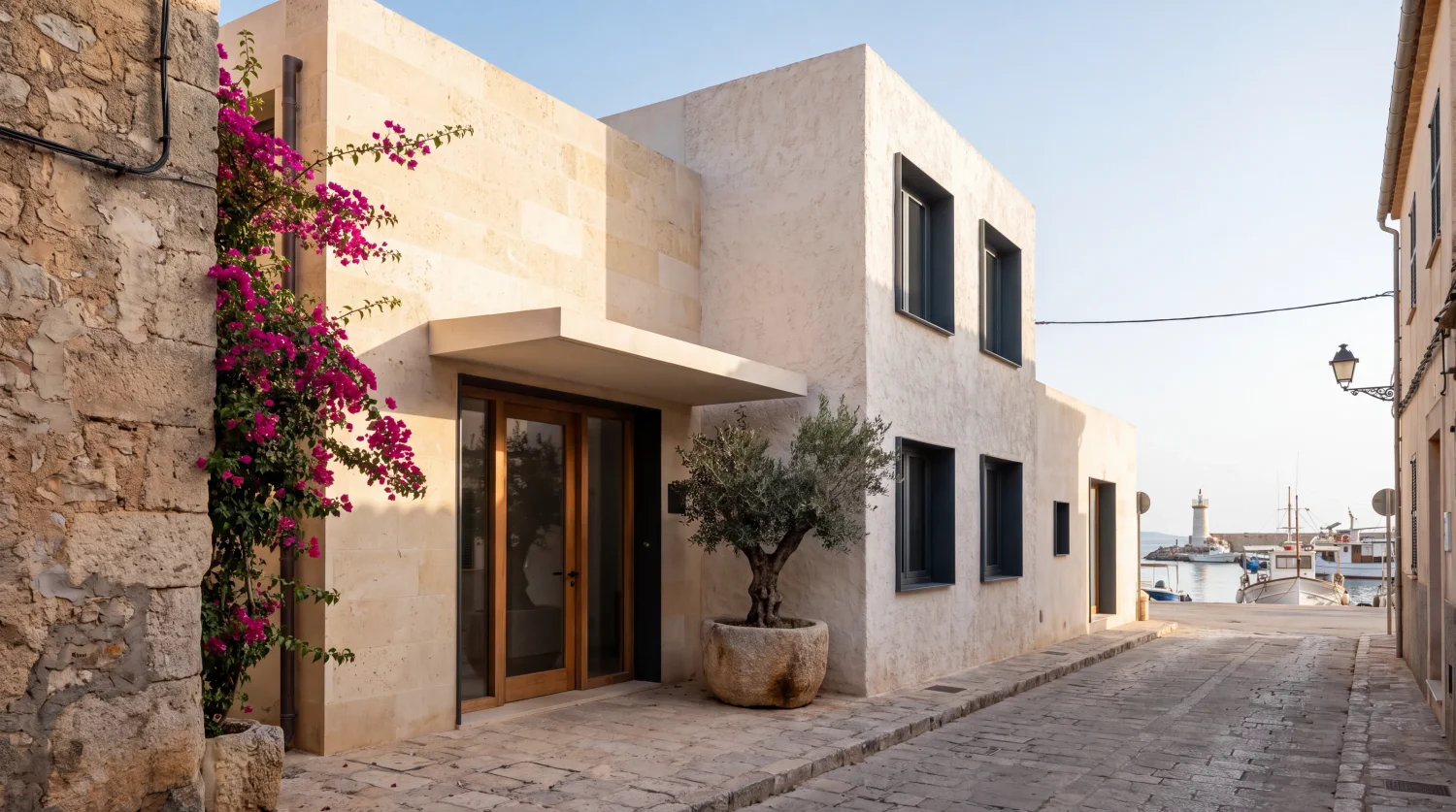
Our office sits a block from the old port — close to the sites we develop, the partners we build with, and the crews who put the work up.
Straight answers to the questions we hear most. This is general information about how buying in Cyprus works — it is not legal, tax or immigration advice, and VAN is a property developer, not a law firm, tax adviser or immigration adviser. For anything that binds you, take advice from an independent Cyprus lawyer or adviser before you sign or pay. Correct as at August 2026.
Yes. All new constructions, extensions, and major structural renovations require planning and building permits issued by local district offices, usually managed via the IPPODAMOS e-system.
Yes. We hold current Cyprus Contractors Register classifications appropriate to each project's scale, and we develop and build under full legal compliance from foundation to handover.
Timelines vary by project size and permit processing. Because we build with a prefabricated hybrid steel system rather than casting a full concrete frame, the structural phase is faster and more predictable — we set a realistic schedule at contract signing and keep you updated at every milestone.
We offer transparent, fixed-scope contracts. Payment stages are tied to physical construction milestones (foundation, structure, walls, finishes) and set out in full before work begins. Ask us whether a given quote is inclusive or exclusive of VAT, and see the VAT answers below — the rate depends on conditions that are personal to the buyer, so it is confirmed for your purchase rather than assumed.
Depending on the project, we offer staged payment plans tied to construction milestones, and can help coordinate financing through local and international banks.
A hybrid steel system. Heavy steel columns and beams carry the structural loads and provide stability; a 150 mm galvanized LSTK frame forms the walls and floors around that skeleton, reinforced with horizontal Omega profiles. The wall cavity is then filled with monolithic foam concrete.
The heavy-steel frame is engineered for the region's wind and seismic loads, and the LSTK walls are filled with monolithic foam concrete for thermal comfort, sound insulation, and fire resistance. For water, we integrate modern pressurization and storage systems to handle seasonal supply.
Yes. Our walls are a monolithic foam-concrete envelope cast between the exterior insulation board — XPS or basalt mineral wool — and the interior cement board, around the LSTK frame — engineered for strong thermal and acoustic performance and designed to meet current Cyprus and EU energy standards.
We provide a 100-year warranty on the steel frame and VAN Foamcrete — other materials carry their manufacturers' warranties — and stay available to resolve any issues after handover. Because we develop and build the property ourselves, one team stands behind it end to end.
Yes. You can enter a project during development and share in its outcome, or acquire a completed property outright — we work with investors across the whole development cycle.
We work alongside trusted, specialized legal advisors to help you understand and navigate Cyprus's residency and investment programs alongside your property purchase.
Yes. We can connect you with property management services that handle everything from tenant screening to maintenance and rent collection, so your investment works for you even when you're not on the island.
At the core: a valid passport, evidence of the funds you are buying with, and — most importantly — an independent Cyprus lawyer who runs the searches and reviews the contract on your behalf. The full list is longer and depends on your circumstances and on which authority is asking. The signed contract of sale is then deposited at the District Lands Office in Pafos, and depending on your nationality and where you are resident you may also need a permit to acquire immovable property — a property-ownership permission from the District Administration, not an immigration document — before title can be registered in your name.
Documents filed with the Land Registry that are not in Greek or English have to be translated by a sworn translator registered in Cyprus; other authorities and banks set their own translation requirements, so check with your lawyer before paying for a translation abroad. We provide the documents for the property itself — the contract, the title and planning documents, the Land Registry search certificate the law requires us to attach, and payment records for what you pay us. Your lawyer tells you what your own file needs.
Buyers from outside the EU need a permit to acquire immovable property, applied for at the District Administration in Pafos; the Ministry of Interior's published guidance states that no fee is payable for it (position as at August 2026 — this law is under review, so confirm the current requirements with your lawyer). EU citizens who are permanently resident in Cyprus are outside the permit regime, but the law as written is narrower for an EU citizen who is not resident here and is buying a second home, so ask your lawyer which side of that line your purchase falls on. Permission is granted for a limited number of properties and a limited plot size; those limits come from government policy rather than from the statute itself and are currently under review, so ask your lawyer what applies to the purchase you have in mind.
In practice the permit is checked at the transfer of title rather than at signature, so contracts are often signed and deposited while the application is still with the district office. That is a decision for you and your lawyer, not a formality: the permit is granted at the authorities' discretion, it can be refused, and the timescale in Pafos is not always short — ask your lawyer how your contract deals with refusal or delay before you sign it. The permit is permission to own a property and nothing more: it carries no residence right and no immigration status, and your lawyer files it.
Depositing the signed contract of sale at the District Lands Office. Your lawyer normally attends to it: it must be done within six months of signature and the Land Registry fee is €50 — confirm in writing with your lawyer who is doing it and by when, because the protection starts on the day the contract is actually deposited, not the day it is signed. From that date the contract sits on the property's file as a registered charge.
What it secures is the money you have actually paid, and it ranks from the day of deposit; anything already registered against the property before then — including any bank mortgage over the land — still ranks ahead of you. It secures your payments; it is not a guarantee that the project completes, or completes on time. Cyprus law also requires us, as seller, to attach to the contract a Land Registry search certificate dated no more than five working days before you sign, so what is registered against the property is in front of you when you sign, and your lawyer's search shows how any existing charge is to be released.
There is no statutory escrow or deposit-protection scheme in Cyprus conveyancing, so money paid before a contract is signed and deposited — a reservation payment, for example — sits outside all of this. Put that to your lawyer before you pay it.
Because your bank and your own Cyprus lawyer are obliged by anti-money-laundering law to check where the money for this purchase came from — and, depending on how they assess the file, to look further back at how the wealth behind it was built. How far they go is their assessment to make, not ours. What is involved depends on where the money came from — earnings, the sale of another property, a gift, a business — and each has its own paperwork; published guidance for Cyprus professionals gives examples, but each bank and each firm sets its own requirements.
Start that conversation with your lawyer early rather than at the point of transfer, because assembling it takes time. Payment for a purchase from us is made by bank transfer from an account in the buyer's own name; payment from someone else's account is one of the most common reasons a purchase stalls, so raise it with your lawyer and with us before you send anything. We provide invoices and payment records for what you pay us — what satisfies the checks is decided by the bank and your lawyer, not by us.
The default on a new build is 19%. A reduced rate of 5% exists, but it is a relief for an individual buyer who will use the home as their own main and permanent residence in Cyprus — it is not a discount for foreign buyers, and nationality plays no part in it either way. There are further conditions: it is available only to individuals, only one dwelling per married couple, and you have to apply to the Tax Department for it before you take possession, so it is something to raise with your adviser early rather than at handover.
Where it applies, it covers the first 130 m² of buildable area and the first €350,000 of value, and it is lost completely rather than tapered if the total transaction value goes above €475,000 or the total buildable area above 190 m². Those thresholds are the position as at August 2026 and can be changed by government decision, so confirm the current figures with your adviser before you rely on them. Buildable area is derived from the architectural drawings submitted for planning permission and is not the same figure as the floor area in a brochure: we will supply those drawings, and your lawyer can confirm from them which figure applies to the unit you are buying — we do not calculate anyone's VAT position.
Where VAT is charged on a purchase, Land Registry transfer fees are not charged on the same transaction as well, although the Land Registry can still assess fees on market value if it does not accept the declared price as market value. And despite the wording, all of this is a tax test about where you will actually live, not an immigration one: claiming the reduced rate neither requires nor grants any residence permit, and holding a Cyprus residence permit — permanent residence included — does not by itself satisfy it.
The test is not how many months a year you are here — it is whether the property will genuinely be your own main and permanent residence in Cyprus. A holiday home, a let or an investment purchase is charged at 19%. A residence permit of any kind, permanent residence included, does not answer this test either way: the Tax Department is asking where you will live, not what status you hold.
The relief is granted on a declaration to the Tax Department, and the property has to remain your main and permanent residence for ten years. If you claim it and later stop living there, the law requires you to notify the Tax Commissioner within 30 days and to repay part of the relief, calculated by reference to the period involved; and if it turns out you were never entitled to it, the full tax falls due. Whether you can honestly make that declaration is a judgement for you and your tax adviser, not for us — take advice before you claim anything.
"Pink slip" is the colloquial name for a temporary residence permit for visitors — officially for holidays, touring, or investigating the possibility of living in Cyprus. It is issued for one year and renewable so long as you continue to meet the criteria, and those criteria are more demanding than most people expect: there is an income requirement, a health-insurance requirement, medical tests, and a bank guarantee for a first permit. It is not granted automatically.
Buying a property is neither required for this permit nor sufficient to obtain it — accommodation is only one of the criteria, and a rental agreement or a declaration from a host satisfies it just as well as a title deed, while the income, insurance, medical and character requirements are assessed separately and owning a home does nothing for them. The permit also carries a real restriction: holders cannot carry out an economic activity in the Republic. It is decided by the Deputy Ministry of Migration and International Protection on its own criteria, and an immigration lawyer is the person to take you through them.
No — no property purchase produces a residence permit, from us or from anyone else. A purchase can form part of an application under the investor route (Regulation 6(2)), but it is one condition among several and the permit is granted by the Deputy Ministry of Migration and International Protection at its own discretion. The Deputy Ministry's published criteria for that route (4th revision, in force since May 2023; position as at August 2026) require a first sale from a development company worth at least €300,000 plus VAT, with the money reaching Cyprus from abroad from your own or your spouse's account, and a secured annual income of at least €50,000 from outside Cyprus, rising by €15,000 for a spouse and €10,000 for each dependent child under 18.
The income requirement is a separate test in its own right: meeting the €300,000 does not carry it. The application also has to show that at least €300,000, excluding VAT, has actually been paid by the date it is submitted, whatever the delivery date of the property — that does not automatically line up with a staged payment plan, so if residence is part of your plan, raise it with us and your lawyer before you agree the payment schedule, not afterwards. Applicants must also declare that they do not intend to work in Cyprus.
And "permanent" describes the kind of permit, not a guarantee that it lasts whatever you do: the published criteria state that it ceases to be valid if the holder and dependants fail to acquire residence in Cyprus within one year of approval, or if they acquire permanent residence abroad or are absent from Cyprus for two years, and evidence that the investment and health cover are maintained still has to be filed. What "acquire residence" requires is not defined in the published text — put that question to your immigration lawyer before you rely on the permit. These criteria change, and an application is assessed under the version in force on the day it is submitted, so confirm the current figures with your immigration lawyer rather than with any brochure.
We can supply the property-side documents — the contract, the payment receipts and evidence that the funds were transferred from abroad. Everything else in the application is yours, and whether it succeeds is for the Deputy Ministry to decide; your immigration lawyer prepares and files it.
No — and nothing we sell does. Permanent residence is a permit to live in Cyprus, granted on conditions and kept on conditions; it is not citizenship, not an EU passport, and not a right of free movement within the EU. The citizenship-by-investment programme was terminated in 2020 and nothing has replaced it.
If anyone is still offering you a Cyprus or EU passport in exchange for a property purchase or an investment, they are describing a programme that no longer exists. Naturalisation is a wholly separate process, decided by a different authority under its own residence, language and character conditions. We cannot tell you whether time spent holding any Cyprus permit would count towards it — that is a question for an immigration lawyer, and not one a developer should be answering.